
US President Donald Trump spoke with Saudi Arabia's King Salman amid the Arab world's biggest diplomatic crisis in years over Qatar's alleged support to extremists, reports Lalit K Jha.
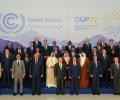
The overwhelming feeling at the end of COP 27 was that despite decades of meetings and landmark accords, like the Paris Agreement, the world was still not doing enough to slow the climate crisis, observes Ambassador T P Sreenivasan.

India succeeded in busting the Pakistani narrative on Operation Sindoor, particularly among the Organisation of Islamic Conference (OIC) member nations, where Islamabad sought succour after carrying out terror activities across the border, Shiv Sena leader Shrikant Shinde said.
'The Trump administration is on the same page as India that Pakistan is not the solution, but the problem itself,' says Rajeev Sharma.
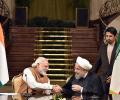
Iranian Ambassador to India Ali Chegeni said his country is 'not for war'. "We are looking for peace and prosperity for everybody in this region," he said.

Under the deal, Israel would suspend its plans to annex large parts of the occupied West Bank.

'The surge of Saudi nationalism is the last thing Washington wants,' says Ambassador M K Bhadrakumar.

The Modi government has been put on notice.'Will it buckle under such pressure? These are times when the moral fibre of the leadership makes all the difference, observes Ambassador M K Bhadrakumar.

As we head into the final year of US President Barack Obama's term, here's a look back at the great images taken by the official White House photographers in 2015.

An estimated 223 people have lost their lives since August 8 in Kerala's worst floods in decades that has caused damage worth more than Rs 20,000 crore.
'You can see the essential contours of his new Pakistan strategy. Rather than keep engaging with or humouring them, he'd rather work on taking their four biggest supporters -- the US, China, the UAE and later Saudi Arabia -- away from them.' 'In his calculation,' says Shekhar Gupta, 'with the total support of all four of these, Pakistan will be forced to moderate its policies.'
 © 2026 Rediff.com - Advertise with us - Disclaimer - Privacy Policy - Sitemap - Feedback - About us - Terms of use - Grievances